Group Dynamics in Remote Workplaces by 2027
20 April 2026
Let’s be honest. When we all scrambled to set up home offices in 2020, we thought we were just moving our desks. We believed the “office” was a physical place we could replicate on a Zoom grid. But as the years have rolled on, a profound truth has settled in: we didn’t just move our desks; we dismantled and then had to entirely reimagine the invisible force field that holds teams together. That force field is group dynamics.
By 2027, the way we understand and cultivate these dynamics in remote and hybrid environments won’t just be a nice-to-have—it will be the core differentiator between companies that merely function and those that truly flourish. We’re moving beyond the basic tools of video calls and Slack channels. We’re entering an era where the psychology of belonging, trust, and collective purpose is being rebuilt, pixel by pixel, across digital space.
The Great Unbundling: From Watercoolers to Digital Currents
Think of a traditional office’s group dynamics like a river. The formal meetings were the main channel, the powerful, directed current. But the real magic—the ecosystem—was in the banks, the eddies, and the tributaries: the quick desk-side question, the overheard conversation that sparks an idea, the shared sigh after a tough meeting, the spontaneous lunch that turns into a brainstorming session. This was the "ambient sociability" that silently oiled the gears of trust and understanding.Remote work, in its early, frantic form, dammed that river. We tried to force the entire ecosystem into the single channel of scheduled video calls. It was exhausting and, frankly, unnatural. It was like trying to appreciate a forest by only looking at individual trees through a telescope.
By 2027, successful organizations won’t try to rebuild the old river. They’ll have learned to engineer a new kind of digital watershed. The "watercooler moment" is dead. Long live the "asynchronous spark." The dynamic won't be about replicating chance encounters, but about architecting for intentional, meaningful micro-interactions that flow naturally across time zones and schedules. We’ll move from a culture of "presence" (Is your camera on?) to a culture of "visible contribution" (I see the value you added to this document at 2 AM your time).
The Pillars of 2027’s Remote Group Dynamics
So, what will hold this new digital architecture up? It rests on psychological pillars that are only now coming into clear focus.1. Trust Built on Output, Not Optics
In the office, trust was often a byproduct of visibility. You saw someone working hard. Remote work brutally severs that superficial link. By 2027, trust will be almost entirely cognitive and task-based, rooted in reliability and results, not in the illusion of busyness.This requires a radical transparency in work. Teams will operate on a "default open" mentality—where project timelines, document iterations, and even decision-making rationales are visible to all by default. It’s the difference between trusting someone because you see them at their desk and trusting them because you can follow the clear, brilliant trail of their work in the team’s digital hub. The manager’s role shifts from overseer to context-provider and blocker-remover. The question changes from "What are you doing?" to "What do you need to excel?"
2. Belonging Through Shared Context, Not Shared Space
Humans are tribal. We need to feel part of a "we." In a physical office, the "we" is reinforced by shared sensory experiences: the same bad coffee, the same view from the window, the same commute gripe. Remote work strips that away, risking a team of isolated "I"s.The answer by 2027? Engineered shared context. This goes far beyond virtual happy hours (which, let’s admit, often feel more like obligatory therapy). It means creating a rich, shared digital landscape that tells the team’s story. This could be:
* A team "digital hearth" like a always-on low-fidelity video space for casual drop-ins.
* Asynchronous video updates that aren’t presentations, but personal check-ins, creating a library of shared human moments.
* Collaborative playlists, virtual "co-working" sessions with focused work blocks, and rituals that celebrate wins in a public, digital forum.
The goal is to create a narrative of us that is compelling enough to compete with the immediate physical environment of someone’s home office.
3. Communication: The Asynchronous-First Imperative
The synchronous video call is the sledgehammer of remote communication. Sometimes you need a sledgehammer. But you can’t build a house with only that tool. By 2027, high-functioning remote teams will master a toolbox of communication cadences.* Asynchronous Deep Work: The default for complex thinking, writing, and feedback. Tools like Loom, detailed docs, and voice notes allow for thoughtful, uninterrupted contribution.
* Synchronous Alignment: Reserved for debates, complex decision-making that requires real-time nuance, and relationship-building that needs emotional resonance.
* Ambient Awareness: Lightweight, low-pressure channels (like specific Slack channels for non-work interests) that replicate the background hum of an office, letting you know what your teammates are into, without the pressure to engage.
The dynamic here is one of respect for cognitive flow and personal rhythm. It acknowledges that the magic of a group isn’t in being in the same mental space at the same time, but in weaving different threads of thought, created at different times, into a stronger tapestry.
4. Conflict Resolution in the Digital Void
Here’s the uncomfortable truth: conflict is harder remotely. The subtle body language that de-escalates tension is missing. Silence on a chat thread breeds paranoia. A misinterpreted tone in an email can fester for days.By 2027, psychologically savvy teams will have proactive conflict protocols. They will normalize "pre-mortems" for projects—discussing what could go wrong in teamwork before it happens. They will have agreed-upon "digital signals" for when a conversation needs to move from text to voice. There will be an emphasis on assumption-checking as a core skill ("I read your message as frustrated, is that accurate or am I misinterpreting?").
The dynamic shifts from avoiding conflict (which is toxic) to having a trusted, clear process for navigating it. The safety net isn't the ability to pop over to someone's desk; it's the shared agreement on how to handle the stumble.
The Human in the Machine: Leadership’s New Role
The leader in 2027’s remote workplace is less a director and more a social architect and emotional cartographer. Their key task is mapping the invisible. They need to be adept at reading the digital signs of burnout, isolation, or misalignment. They must foster psychological safety with intention—explicitly inviting dissent, celebrating smart failures, and modeling vulnerability on video.They will spend less time in spreadsheets and more time asking questions like: Where are the information bottlenecks in our digital flow? Who is quietly disengaging? Are our rituals creating energy or draining it? Their power comes not from authority of position, but from their ability to connect dots—and people—across the void.
The 2027 Forecast: Integration, Not Just Connection
As we look toward 2027, the buzzwords of "remote work" and "hybrid models" will fade into the background. They’ll simply be how work is. The frontier won’t be the technology—that will be seamless and immersive, possibly incorporating VR/AR for true spatial collaboration. The frontier will be the human operating system.The most successful groups will be those that understand this isn’t about connecting computers. It’s about connecting minds and hearts in a distributed world. They will have moved from trying to survive the distance to thriving because of the diversity of thought and lifestyle that distance allows.
The group dynamic of the future is a conscious creation. It’s a garden we tend to in digital soil. We must choose the seeds (our rituals), provide the right nutrients (psychological safety and clear context), and understand that not every plant grows at the same speed or in the same way. By 2027, we will finally stop lamenting the loss of the office river. Instead, we’ll be too busy cultivating our own unique, resilient, and breathtaking digital ecosystems.
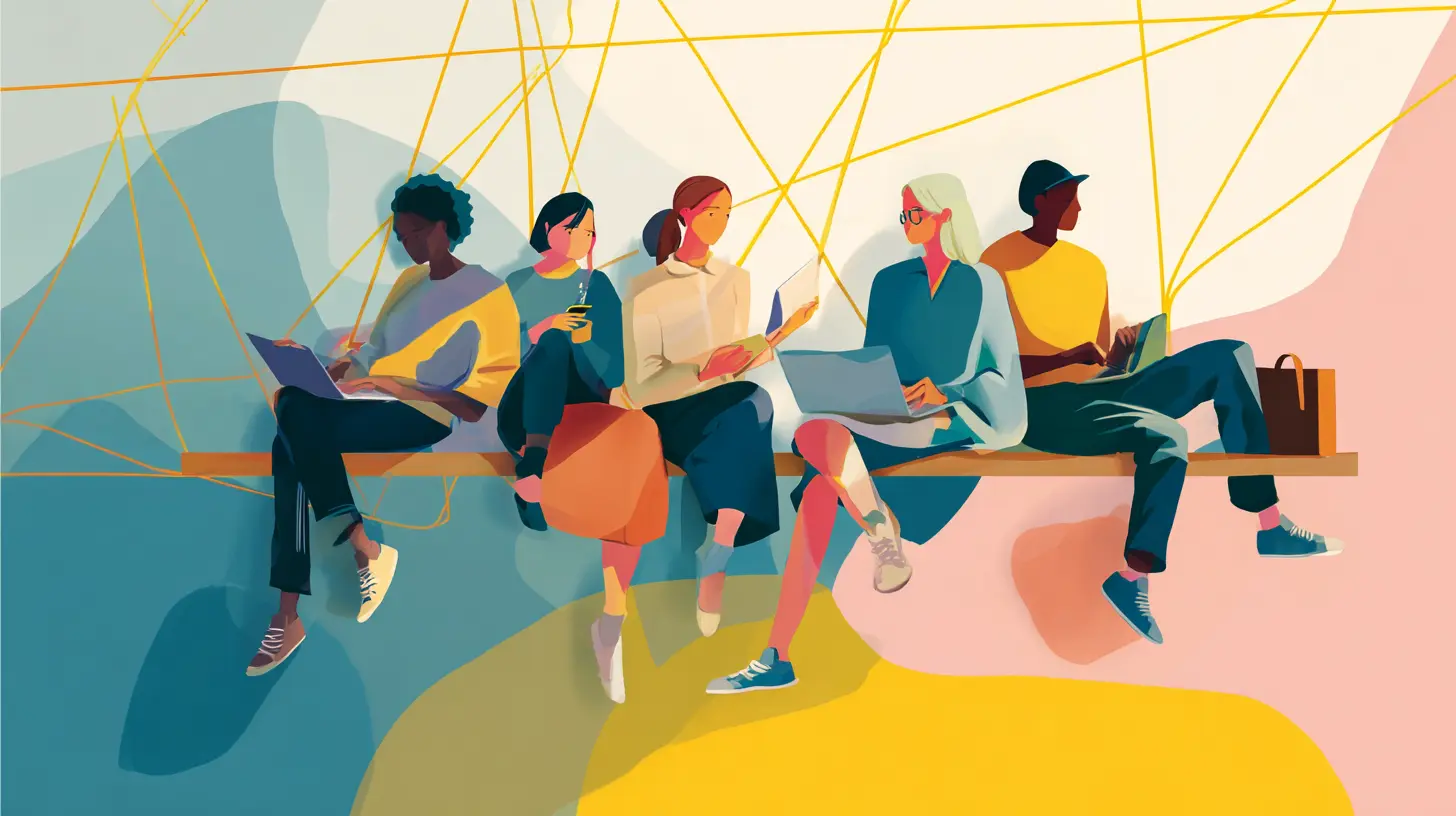
all images in this post were generated using AI tools
Category:
Group DynamicsAuthor:

Janet Conrad
Discussion
rate this article
1 comments
Jessamine Franklin
Great insights! Looking forward to future trends in team collaboration.
April 29, 2026 at 4:59 AM
Janet Conrad
Thanks! I'm excited to share more on this evolving topic. Stay tuned!