How Cognitive Science Can Help Us Overcome Procrastination
26 April 2026
We’ve all been there—you’ve got a super important task staring at you, but suddenly, rearranging your sock drawer seems like a top priority. Sounds familiar? That, my friend, is procrastination in action—the sneaky mental glitch that stops us from doing what we know we should be doing.
But what if I told you that the key to conquering procrastination lies deep within the inner workings of your brain? That’s where cognitive science jumps in.
In this article, we’re diving headfirst into what cognitive science says about procrastination—and how you can use that insight to finally kick the habit to the curb. Think of this as your brain’s user manual for productivity.
What Is Cognitive Science Anyway?
Let’s break it down.Cognitive science is the study of how our mind works—how we think, learn, remember, and make decisions. It’s like psychology’s nerdy cousin who hangs out with neuroscientists, linguists, philosophers, and computer scientists. Together, they decode the complex machinery behind our everyday thinking.
So, when you procrastinate, cognitive science digs into the why you're doing it and offers tools for how to stop.
First, Let’s Get Real About Procrastination
Before we get all sciencey, let’s call procrastination what it truly is: a self-sabotaging habit. It's not just laziness. Nope—it’s way deeper than that.Procrastination is an emotional coping mechanism. When a task triggers stress, fear, boredom, or self-doubt, your brain says, “Nope, we’re out!” and redirects you to something more soothing (cue Netflix or cleaning your room for the third time this week).
What's happening here is a tug-of-war between your limbic system (the emotional, impulsive part of your brain) and your prefrontal cortex (the logical, future-planning part). Most days, the limbic system wins—and you end up scrolling TikTok instead of writing that report.
Cognitive Science to the Rescue
Now that we understand the mental battlefield, here’s how cognitive science gives us the strategies—and the upper hand—to beat procrastination once and for all.1. Understanding The Dopamine Loop
Let’s talk brain chemistry.Your brain is wired to seek pleasure. That’s dopamine’s job. Every time you do something enjoyable—like eating chocolate or getting likes on Instagram—your brain rewards you with a dopamine hit.
Here’s the kicker: even procrastination triggers dopamine. Yup—checking your phone instead of working gives you that instant hit. Meanwhile, the task at hand feels like a slog with zero payoff.
The Fix: Make your task rewarding. Break it into small steps and reward yourself after each one. Dopamine loves progress. You’ll start craving the task just as much as those mindless distractions.
2. The Power of Temporal Discounting
Ever promised yourself you’d do something “tomorrow”? Guilty as charged.That’s called temporal discounting. Your brain undervalues future rewards compared to immediate ones. So even if finishing your project will feel amazing next week, a nap feels better right now.
The Fix: Make the future feel real. Visualize the benefits of completing the task. Imagine turning in that assignment and feeling like a rockstar. Create a vivid mental image to shrink the psychological distance between now and later.
3. Engage Your Working Memory
Working memory is like your brain’s sticky note. It holds info temporarily while you solve problems or make decisions. But here’s the catch—it gets overwhelmed easily.So when you’re juggling a million thoughts about a task, your working memory gets crowded, and your brain opts for the path of least resistance: procrastination.
The Fix: Clear the mental clutter. Use to-do lists, mind maps, or write out exactly what you need to do. Offloading your brain onto paper gives you more cognitive room to actually start.
4. Harness Cognitive Reappraisal
This is nerdy talk for changing how you think about a task.Instead of telling yourself, “Ugh, this is so boring,” reframe it. Try, “This is a chance to learn something new,” or “This will feel great once it’s done.”
It might sound cheesy, but changing your mindset shifts your emotional response—and that’s half the battle.
The Fix: Be your own spin doctor. Catch negative thoughts and reframe them into something positive or at least neutral. You’ll reduce emotional resistance and boost motivation.
5. Use Implementation Intentions
This is a fancy term for a simple but powerful trick: "If X happens, then I'll do Y."For example: “If it’s 9 am, I’ll start writing for 20 minutes.”
This creates a mental link between your environment and your action, making it harder for your brain to wiggle out of it.
The Fix: Plan with when and where. Don’t just say, “I’ll do it later.” Be specific. “I’ll work on the report at 7 pm at my desk.” You’re giving your brain a clear, predictable cue.
6. Tap Into Metacognition
Metacognition is thinking about your thinking. Sounds deep, right?But really, it’s just being aware of your thoughts—and noticing when you start to procrastinate.
The Fix: Pause and reflect. Ask yourself, “Why am I avoiding this? What am I feeling right now?” That tiny moment of awareness can shift you out of autopilot and help you troubleshoot your mental roadblock.
7. Learn About Ego Depletion (And Don’t Fall For It)
Ego depletion is the idea that self-control is a limited resource. After a long day of making decisions, your willpower drops—and procrastination kicks in.But here’s the twist: recent research shows it's not just physical depletion—it’s largely mental. If you believe you’re drained, you act like it.
The Fix: Reframe your energy. Tell yourself, “I’ve got enough fuel in the tank for this” instead of “I’m too tired.” You’ll be surprised how powerful that mindset shift can be.
8. The Zeigarnik Effect—Leave Things Unfinished (on Purpose)
Ever had a song stuck in your head? That’s the Zeigarnik effect—our brains remember unfinished business more than completed tasks.Use this to your advantage.
The Fix: Start, but don’t finish. Begin your task, then stop mid-way. It creates mental tension that draws you back in. Your brain wants to finish what it started.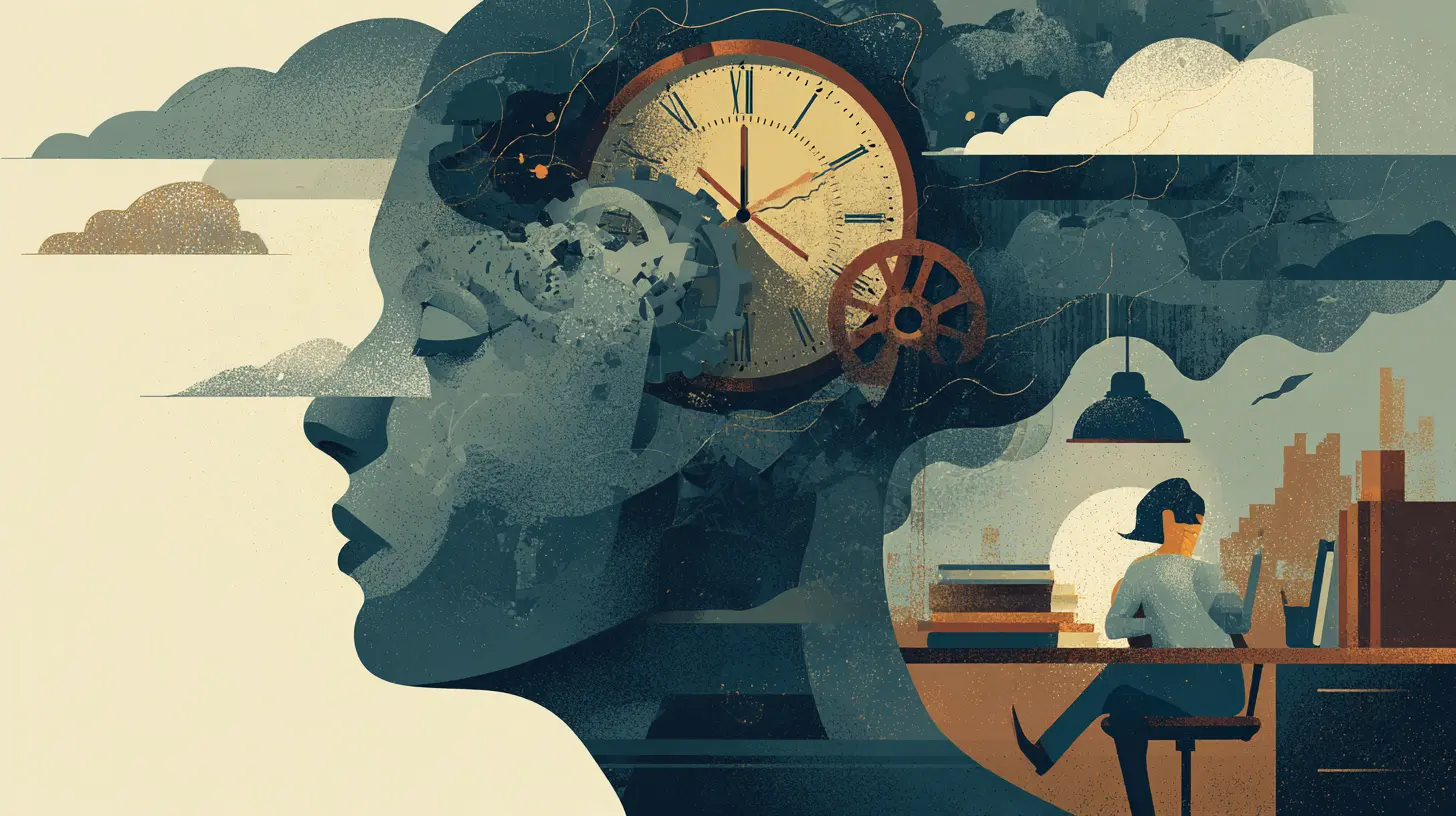
Simple Daily Habits Backed by Science
Let’s put all this into a practical playbook. Here are some bite-sized habits that apply cognitive science principles to your everyday workflow:- 💡 Start with a 2-minute rule: If the task feels too big, commit to just 2 minutes. Often, starting is the hardest part.
- ⏰ Timebox your tasks: Use timers (like the Pomodoro Technique) to work in short bursts with breaks.
- ✔️ Track your progress: Progress fuels motivation. Use checklists, apps, or journals to see how far you've come.
- 😌 Practice mindfulness: A few minutes of focusing on your breath can help reduce emotional resistance.
- 👯♀️ Get an accountability buddy: Social pressure can override your brain’s urge to slack off.
Final Words: You Can Outmaneuver Procrastination
Here’s the truth: procrastination isn’t a character flaw. It’s a brain flaw. But the cool part? Once you understand how your cognitive systems work, you can totally outsmart them.You’re not lazy. You’re human. But with the help of cognitive science, you're now a human with an upgraded toolkit.
Start small. Start messy. Just start.
Because every time you beat procrastination, you’re rewiring your brain—and building the identity of someone who gets stuff DONE.
all images in this post were generated using AI tools
Category:
Cognitive ScienceAuthor:

Janet Conrad
Discussion
rate this article
1 comments
Ximena Carey
This article offers valuable insights into procrastination through cognitive science. The strategies presented can empower readers to better understand their habits and improve productivity effectively.
May 7, 2026 at 4:36 AM
Janet Conrad
Thank you for your feedback! I'm glad you found the insights and strategies helpful for tackling procrastination.