How Mindfulness Can Help You Cope with Uncertainty
6 December 2025
Let’s start with a brutally honest truth bomb: life is a mess. A glorious, chaotic, mind-numbing mess that no planner, to-do list, or five-year strategy can fully tame. You can stockpile canned beans, backup hard drives, and hoard toilet paper (we've seen you), but uncertainty? Yeah, it still waltzes in uninvited like a nosy neighbor with no filter.
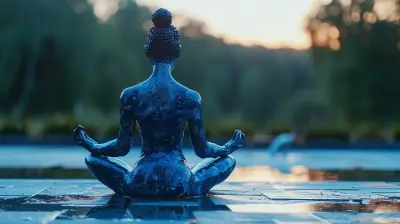
But hey, before you start rage-Googling “How to control everything,” let me introduce you to a deceptively simple concept that’s been quietly doing the heavy lifting in the mental health world: mindfulness. Yup, that thing where you’re supposed to sit cross-legged like a serene cucumber and magically fix your life by breathing.
Don't roll your eyes just yet. Stick with me for a few minutes. Because mindfulness isn’t about levitating or becoming a monk (unless that’s your jam). It's actually a secret weapon for grappling with the one thing none of us can escape: uncertainty.

What The Heck Is Mindfulness, Anyway?
Alright, let’s clear the air. Mindfulness isn’t some woo-woo nonsense cooked up in a spiritual smoothie bar. It’s basically this: being fully present and aware of where you are and what you’re doing—without spiraling into judgment or trying to escape your reality.Think of it like this: your brain is a toddler with a caffeine addiction. It runs from “What if I mess up that meeting tomorrow?” to “Should I text my ex?” faster than you can say "regret." Mindfulness hands your brain a coloring book and says, “Chill here for a sec.”
It’s about tuning into the now instead of doomscrolling through possible futures or cringing at past conversations while trying to sleep.

So, Why Are We So Freaked Out By Uncertainty?
Good question. Humans are creatures of habit. We like comfy routines, Google Maps, and knowing what's for dinner. Uncertainty is like someone turning off your GPS in the middle of a desert road trip and tossing your snacks out the window. Panic mode: activated.Here’s the kicker: our brains interpret uncertainty as a threat, even if it’s not objectively dangerous. That’s why your stomach flips when your job goes through “restructuring” or your crush takes three hours to reply “lol.”
Your lovely little amygdala (the part of your brain in charge of fight-or-flight) starts throwing a tantrum, and next thing you know, your thoughts are spiraling into worst-case scenarios like a dramatic soap opera.

Mindfulness to the Rescue: How It Actually Helps
Okay, time for the juicy stuff. Here’s how mindfulness steps in like a zen superhero when life throws chaos your way.1. It Teaches You to Pause Before You Panic
Imagine your mind as a snow globe. Every time uncertainty hits, someone shakes the thing like a toddler hopped up on sugar. Mindfulness helps you stop shaking the globe.By simply noticing your thoughts—without trying to fix or judge them—you give your brain space to breathe. That pause? That’s magic. It’s the split-second where you choose not to slide into a stress spiral.
Cue dramatic music
2. It Gets You Out of the “What If” Loop
The “what if” loop is like a broken record from hell. “What if I lose my job?” “What if this relationship ends?” “What if the birds are spying on us?” (Okay, maybe not that one).Mindfulness gently taps you on the shoulder and says, “Hey, come back to now.” Because really, the only moment you can actually control is this one.
Spoiler: worrying about the future doesn’t stop it from happening—it just ruins your present. Total rip-off, I know.
3. It Reduces Stress Without a Medicated Coma
Stress isn’t just a mental thing—it shows up in your body like an unwanted sidekick. Rapid heartbeat, headaches, clenched jaw, soul-crushing fatigue… sound familiar?Mindfulness helps activate your parasympathetic nervous system (aka the chill-out mode), lowering your heart rate and blood pressure like a natural sedative—WITHOUT side effects like drowsiness or dry mouth. Win-win.
4. It Builds Emotional Resilience (Like an Inner Emotional Gym)
Think of mindfulness as emotional weightlifting. The more you practice, the stronger you get at facing the unknown without falling apart like a soggy cupcake.You’ll start to notice your reactions without getting swept away by them. Instead of freaking out, you’ll observe: “Oh look, anxiety’s back. Cool.” And then move on with your day like the badass you are.
5. It Boosts Focus (Because the Present Isn’t Going to Focus Itself)
When the future’s fuzzy and the past is a minefield of cringe, your attention starts playing hopscotch. Mindfulness helps anchor your attention so you can actually focus on what matters.No, it’s not going to magically make spreadsheets fun, but it will help you stop checking TikTok every 4.5 seconds while pretending to work.

But Wait… Isn’t Mindfulness Just Meditation?
Ah, the million-dollar question.Meditation is like the gym—mindfulness is the muscle. So yes, you can practice mindfulness through meditation (and it helps, big time), but you don’t have to turn into a full-blown yogi to be mindful.
You can practice mindfulness while brushing your teeth, walking your dog, or even while pretending to listen in a Zoom meeting. It’s all about noticing the experience instead of zoning out on autopilot.
How To Practice Mindfulness Without Losing Your Mind
Let’s be real—sitting still with your thoughts can feel like being trapped in an elevator with a clown. But stick with it. It gets easier (and less terrifying) with time.Here are a few no-nonsense ways to sneak mindfulness into your life:
Start Small (Like, Really Small)
Try just 2-3 minutes a day. That’s less time than it takes to scroll through one Twitter feud.Sit, breathe, and notice your breath going in and out. When your mind wanders (which it will, because brains), gently bring it back. No judgment. You're not trying to clear your mind—you’re just watching it like a curious scientist… or a bored cat.
Try the Five Senses Exercise
This one’s great for grounding. Name:- 5 things you see
- 4 things you can touch
- 3 things you hear
- 2 things you smell
- 1 thing you taste
Boom—welcome back to the land of now.
Upgrade Mundane Moments
Turn daily routines into mindfulness rituals. Washing dishes? Feel the water. Smell the soap. Try not to throw a fork. Brushing your teeth? Notice the bristles. The minty taste. The way your arm moves.You get the idea. It’s about noticing, not judging. And definitely not overthinking. (Which, ironically, we all do while trying not to overthink. Oh, the irony.)
Use Guided Meditations (Training Wheels for Your Brain)
Apps like Headspace, Calm, and Insight Timer are filled with guided meditations for every situation imaginable—stress, anxiety, insomnia, even that weird existential dread that hits at 3 AM.It’s like having a mindfulness coach in your pocket. Way cheaper than therapy and less chance of getting ghosted like that one therapist who never emailed back. (Just me?)
Real Talk: Mindfulness Won’t Fix Everything—But It’ll Help You Handle It
Let’s not pretend mindfulness is a cure-all. It’s not going to pay your bills or make your crush text back. It won’t save the economy or make your boss less micromanage-y. (Is that a word? It is now.)But it will help you become the kind of person who can face uncertainty without falling apart. It gives you space between the chaos and your reaction to it. And in that space? That’s where your power lives.
Mindfulness isn’t about escaping reality—it’s about facing it head-on, with clarity and calm and maybe just a hint of sass. Because let’s be honest, this whole “being human” thing? It’s wild.
So next time life throws you a curveball, instead of ducking or screaming into a pillow, take a breath. Get present. And remember: you’ve got this. You’re not a mess—you’re a mindful masterpiece in progress.
And if all else fails… breathe, blink slowly like a wise owl, and whisper, “This too shall pass.” Because spoiler alert: it always does.
all images in this post were generated using AI tools
Category:
MindfulnessAuthor:

Janet Conrad
Discussion
rate this article
1 comments
Zealot Bowman
Embracing mindfulness can truly transform your approach to uncertainty—great insights in this article!
December 13, 2025 at 4:44 AM
Janet Conrad
Thank you! I'm glad you found the insights helpful. Embracing mindfulness really does make a difference in navigating uncertainty.