The Role of Genetics and Environment in Shaping Personality
9 May 2026
Have you ever met siblings who are polar opposites? One’s a social butterfly, while the other prefers books over people. Same parents, same house, same dog—so what gives?
Well, personality is like a smoothie made with two main ingredients: genetics (your DNA) and environment (your life experiences). Some flavors come from Mom and Dad, while others are blended in by your surroundings. Let’s break it down and see how these two forces team up—or sometimes fight—to shape who we are.

Nature vs. Nurture: The Never-Ending Debate
Ah, the age-old battle—are we born a certain way, or does life mold us? Psychologists have been arguing about this for centuries like siblings fighting over the last slice of pizza. The truth? It’s both.Think of it this way: Genetics hands you a script, but the environment edits, rewrites, and sometimes even sets it on fire.

The Role of Genetics in Personality
1. The DNA Blueprint
Ever wondered why you have your dad’s stubbornness or your mom’s sarcasm? That’s genetics at work. Your DNA carries tiny codes from your ancestors, influencing traits like temperament, intelligence, and even emotional stability.Studies on twins (because what better way to test nature vs. nurture?) show that identical twins, even when raised separately, often share strikingly similar personalities. This proves genes have a big say in personality formation.
2. The “Big Five” and Genetics
Psychologists have boiled personality down to five major traits, known as the Big Five Personality Traits:- Openness (Are you adventurous or do you like your routine?)
- Conscientiousness (Are you organized or a hot mess?)
- Extraversion (Social butterfly or couch potato?)
- Agreeableness (Easygoing or a little... difficult?)
- Neuroticism (Chill or worrywart?)
Genetic studies suggest that these traits are highly heritable—meaning if your parents are naturally anxious or outgoing, you’ve likely inherited a similar tendency.
3. Genes Are Not Destiny
Now, before you blame your DNA for everything (Nice try, but “It’s my genes” won’t get you out of doing chores), remember that genetics only sets the foundation. Your environment plays a huge role in whether these traits shine or stay in the background.
How Environment Shapes Personality
1. Family: Your First Social Experiment
Your family is basically the first “science lab” where your personality starts brewing. Were you raised in a strict household or one that let you run wild? Did your parents praise you or criticize every little thing?- Loving, supportive parents? You might develop strong self-esteem.
- Overly critical or neglectful parents? Cue self-doubt and insecurity.
- Older siblings? Congratulations, you were their unpaid intern.
2. Culture: The Unseen Influencer
Culture shapes what we value, how we express emotions, and what we consider “normal.” Western cultures often encourage independence, while Eastern cultures value community and respect for elders.Ever notice how extroversion is praised in the U.S. but in some countries, being reserved is the gold standard? That’s cultural influence at play.
3. School and Peer Groups: Personality Boot Camp
School’s not just for math and history—it’s also a battlefield where your personality is tested.- Were you the class clown? You probably thrive on social approval.
- The quiet kid? You might be deep-thinking and introspective.
- The rebel? Maybe strict rules made you question authority.
Peers shape personality big time. If your friends are risk-takers, you might lean into adventure. If they love books, chances are you’ll dive into literature too.
4. Trauma and Life Experiences: The Unexpected Editors
Life throws curveballs—some good, some bad. A tough childhood might make you resilient or more anxious. A supportive mentor might boost your confidence. Major life events—loss, struggles, big wins—they all leave marks on your personality.Think of personality as a tree:
- Genetics are the seeds.
- Environment is the soil, sun, and rain.
- Life experiences are the storms and sunshine that shape its growth.
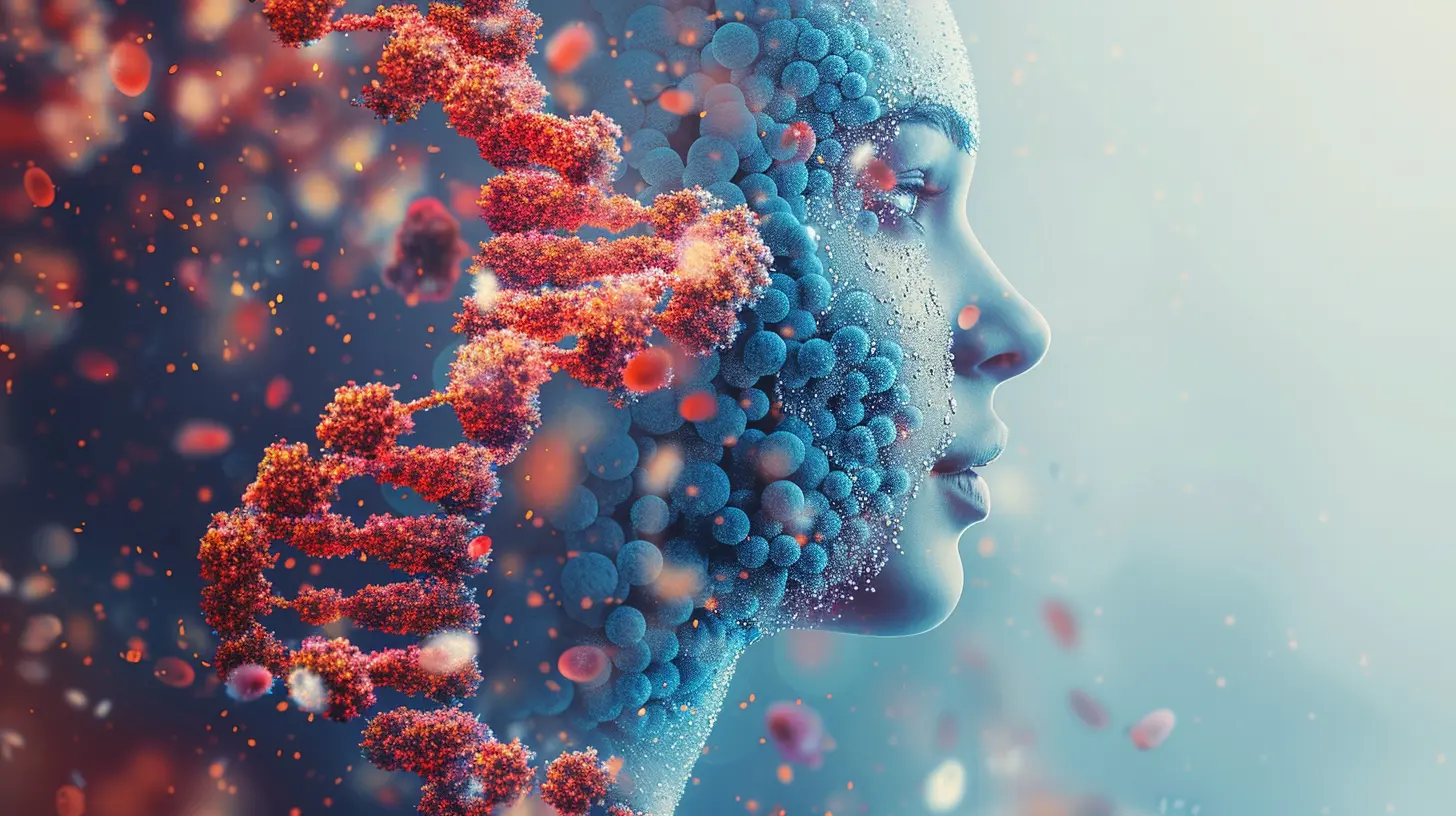
The Perfect Mix: How Nature and Nurture Work Together
Now, here’s the kicker: genes and environment don’t work separately—they interact. Ever heard of epigenetics? It’s a fancy way of saying that your experiences can turn certain genes "on" or "off."- Have anxious parents but grew up in a calm, supportive home? You might not be as anxious.
- Have a natural talent for music but never practiced? That gift stays hidden.
- Were naturally shy but forced to socialize? You might become more confident over time.
It’s like baking cookies. You can have an amazing recipe (genes), but if the oven (environment) is messed up, the final product could be totally different!
So… Are You Born This Way or Made This Way?
The answer is a messy, frustrating "both." Your genes lay the groundwork, but your life experiences color outside the lines.- If personality was 100% genetic, identical twins would have identical personalities (they don’t).
- If personality was 100% environment, siblings raised in the same household would be exactly the same (they aren’t).
Instead, it’s a dance between nature and nurture—one step genes, one step environment, and sometimes, an unexpected cha-cha from life itself.
Final Thoughts
At the end of the day, your personality is uniquely yours, molded by a mix of inherited traits and life’s unpredictable adventures. While genetics gives you a head start, your choices, experiences, and environment shape who you truly become.So, next time you wonder why you are the way you are, blame your parents a little—but also, give credit to the wild ride of life!
all images in this post were generated using AI tools
Category:
Personality TypesAuthor:

Janet Conrad
Discussion
rate this article
1 comments
Maddox Chapman
Great insights on how both genetics and environment influence who we become!
May 22, 2026 at 4:42 AM
Janet Conrad
Thank you! I'm glad you found the article insightful. It's fascinating how both factors interplay in shaping our personalities.