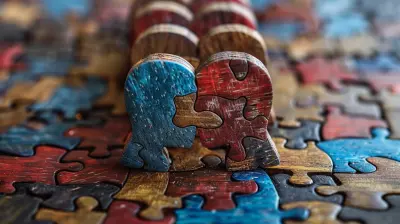
Understanding Highly Sensitive People: Personality or Trait?
7 July 2026
Have you ever been told you're "too sensitive"? Or maybe someone close to you reacts deeply to things that barely cause a blip on your radar? There’s a reason for that—it's not drama, weakness, or an overreaction. It could be a little-known but very real trait called high sensitivity.
In this article, we’re diving headfirst into what being a Highly Sensitive Person (HSP) is all about. Is it a full-blown personality type, or just a trait that shows up in some people? We’ll peel back the layers, look at the science, bust some myths, and shed light on what life is really like for HSPs.
Let’s get into it.
What Is a Highly Sensitive Person (HSP)?
A Highly Sensitive Person (HSP) is someone who feels things more deeply than the average person. That’s not just emotions—we’re talking about everything. Sounds seem louder. Lights feel brighter. Criticism cuts deeper. And beauty? It can bring them to tears.The term “Highly Sensitive Person” was first coined by psychologist Dr. Elaine Aron in the 1990s. Since then, it’s gained traction in both psychology and pop culture. But let’s clear the air—high sensitivity isn’t a syndrome or disorder. It’s a personality trait, found in about 15-20% of the population. That’s roughly 1 in 5 people!
Think of it as a more finely tuned nervous system. HSPs take in more sensory information and process it more deeply. This can make them incredibly empathetic, intuitive, and thoughtful—but also prone to overwhelm, anxiety, and burnout if they’re not mindful of their limits.
Personality or Trait? The Great Debate
So here’s the million-dollar question: is high sensitivity a full-fledged personality type, like being introverted or extroverted? Or is it just one piece of a larger puzzle?The “Trait” Theory
Most psychologists lean toward calling it a “trait,” not a stand-alone personality type. That makes sense, right? It’s one facet of how a person experiences the world, just like curiosity, patience, or optimism. You can be highly sensitive and extroverted, energetic, ambitious—you name it.Think of sensitivity like salt. It’s not the whole dish—it’s something that flavors everything else.
But Wait—There’s More
Some argue that for people who are very high on the sensitivity scale, it starts to shape their entire personality. They make decisions based on avoiding overstimulation. They notice subtleties in conversations. They read between the lines like pros. In that light, you could say high sensitivity becomes a dominant feature of their personality.So, where do we land? Officially, it's a trait. But for many, it can feel like a defining part of who they are.
Common Traits of Highly Sensitive People
Alright, so how do you know if you—or someone you love—is an HSP? Here are some telltale signs to look for:1. Deep Processing
HSPs don’t just skim the surface. Whether it’s a complex problem, a piece of music, or a conversation—they’re thinking about the big picture, the implications, the "what ifs." They reflect, analyze, and ruminate a lot.2. Easily Overstimulated
Noisy environments, crowded spaces, glaring lights—it’s like the volume on the world is turned way up. While some people thrive in high-energy situations, HSPs may need to retreat to recharge.3. Emotional Reactivity
They feel deeply. A compliment can light them up. A mean comment? It can sting for days. Their emotional world is vivid, which makes them great at connecting with others—but also vulnerable to emotional burnout.4. High Empathy
HSPs often pick up on others’ moods without a word being said. This makes them incredible friends, therapists, and caregivers. But it can also be draining, especially if they don’t set healthy emotional boundaries.5. Awareness of Subtleties
Did you catch that shift in tone? The subtle facial expression? That offhand comment? The HSP probably did. They’re tuned in to micro-signals that many folks miss entirely.
The Science Behind Sensitivity
This isn’t guesswork or emotional fluff—there’s neuroscience behind it.Studies using fMRI scans show that HSPs have more activity in areas of the brain related to empathy and awareness. They’re wired differently. Their mirror neurons (which help us “mirror” the feelings of others) are extra active, making them more emotionally attuned and responsive.
Fun fact: Even animals display signs of high sensitivity. About 100 species—including monkeys, fish, horses, and dogs—have members that show similar sensitivity patterns. This suggests it could be an evolved survival mechanism to stay alert and responsive to the environment.
So nope—you're not "too sensitive." Your brain is literally built for depth and nuance.
HSPs Are Not All Alike
Here’s another juicy bit: not all HSPs are the quiet, shy types. Sure, many are introverts (about 70%), but a decent chunk—30%—are actually extroverts. Yep, bubbly, social, life-of-the-party types with a sensitive side!You can also be a “high sensation seeker” who loves adventure and get overwhelmed after a long day of socializing. It’s more complex than the stereotypes.
Perks of Being a Highly Sensitive Person
Alright, we’ve talked a lot about the challenges. But let’s not forget—being an HSP comes with some serious superpowers.Creativity
HSPs have rich inner worlds. They think deeply, imagine wildly, and often channel that into music, writing, art, or innovative ideas. Many creative geniuses throughout history—like Mozart and Van Gogh—are believed to have been HSPs.Intuition
Ever get a “gut feeling” that turned out to be spot-on? HSPs excel at this. They pick up patterns, vibes, and nuances almost subconsciously, allowing them to make incredibly intuitive decisions.Compassion
Because they feel deeply, they also care deeply. HSPs are often the emotional glue in their relationships and communities, offering genuine support and understanding.Attention to Detail
Nothing gets past them. Whether it’s catching a typo in a presentation or noticing when someone’s “off,” they have a keen eye for the little things that matter.The Challenges of High Sensitivity
Of course, it’s not all sunshine and self-awareness. For many HSPs, the world can feel like a bit “too much.”Burnout
Constant emotional input can lead to sensory and emotional overload. Without proper boundaries and downtime, HSPs can hit empty pretty fast.Misunderstanding
Being told you're "too sensitive" or having your reactions dismissed can be invalidating. Many HSPs grow up feeling like they need to toughen up or hide their true selves.Difficulty with Change
Routine offers comfort. Sudden disruptions or unpredictable environments can throw HSPs for a loop, requiring extra time to adapt.Struggles in Relationships
Because they care so much, HSPs might take things personally or over-analyze interactions. This can lead to miscommunication or emotional exhaustion if not addressed.How to Thrive as an HSP (or Support One)
High sensitivity isn't something to “fix”—it’s something to embrace. With a few tweaks, HSPs can harness their gifts without burning out.1. Create Quiet Time
HSPs need time to decompress—plain and simple. Whether it's meditating, journaling, or just chilling with a good book, that downtime is non-negotiable.2. Set Boundaries
It’s okay to say no. Over-scheduling or people-pleasing is a recipe for exhaustion. HSPs thrive when they protect their energy like it’s gold.3. Embrace Your Nature
Stop trying to be someone you’re not. You don’t need thicker skin. You need better self-care, supportive people, and environments that respect your wiring.4. Find Your People
Surround yourself with those who “get it.” Whether that’s friends, partners, or therapists—having someone understand your sensitivity makes a world of difference.5. Learn Emotional Regulation
It’s not about blocking feelings—it’s about managing them. Mindfulness practices, breathing exercises, and even therapy can help HSPs navigate emotional tides without getting swept away.Myths About Highly Sensitive People (Let’s Bust ‘Em)
Time to tackle a few misguided ideas floating around out there.Myth 1: HSPs Are Weak
Truth: Sensitivity requires strength. Imagine walking around with all your senses turned up to 11 and still showing up every day. That’s not weak—that’s brave.Myth 2: HSPs Hate People
Nope. Many HSPs love social interaction—they just need balance and breaks to avoid overwhelm.Myth 3: It’s a Choice
High sensitivity is part of someone’s biological makeup. It’s not about being difficult; it’s about being different.Myth 4: Therapy Can "Cure" It
Therapy can help HSPs manage their sensitivity, but it’s not something to cure. It’s a trait, not a trauma or defect.Final Thoughts: Sensitivity Is a Strength
Is being a Highly Sensitive Person a personality or a trait? Technically, it’s a trait—but for many, it feels like a central part of who they are. And that’s okay.The world needs HSPs—the artists, the healers, the listeners, the lovers. They’re the ones who pause to notice beauty, who feel others’ pain, and who bring depth and meaning to our fast-paced, loud, and often disconnected world.
So if you’re an HSP, wear your sensitivity like a badge of honor. And if you’re close to one—be gentle, be kind, and realize the quiet strength they carry.
all images in this post were generated using AI tools
Category:
Personality TypesAuthor:

Janet Conrad
Discussion
rate this article
1 comments
Capri Curry
Embracing the unique qualities of highly sensitive people enriches our understanding of human diversity. Recognizing this trait opens doors to compassion and connection, empowering both sensitive individuals and those around them to thrive together...
July 13, 2026 at 4:40 AM
Janet Conrad
Absolutely. Acknowledging the strengths of highly sensitive people fosters deeper connections and enhances our collective experience. It's a valuable perspective that benefits everyone.